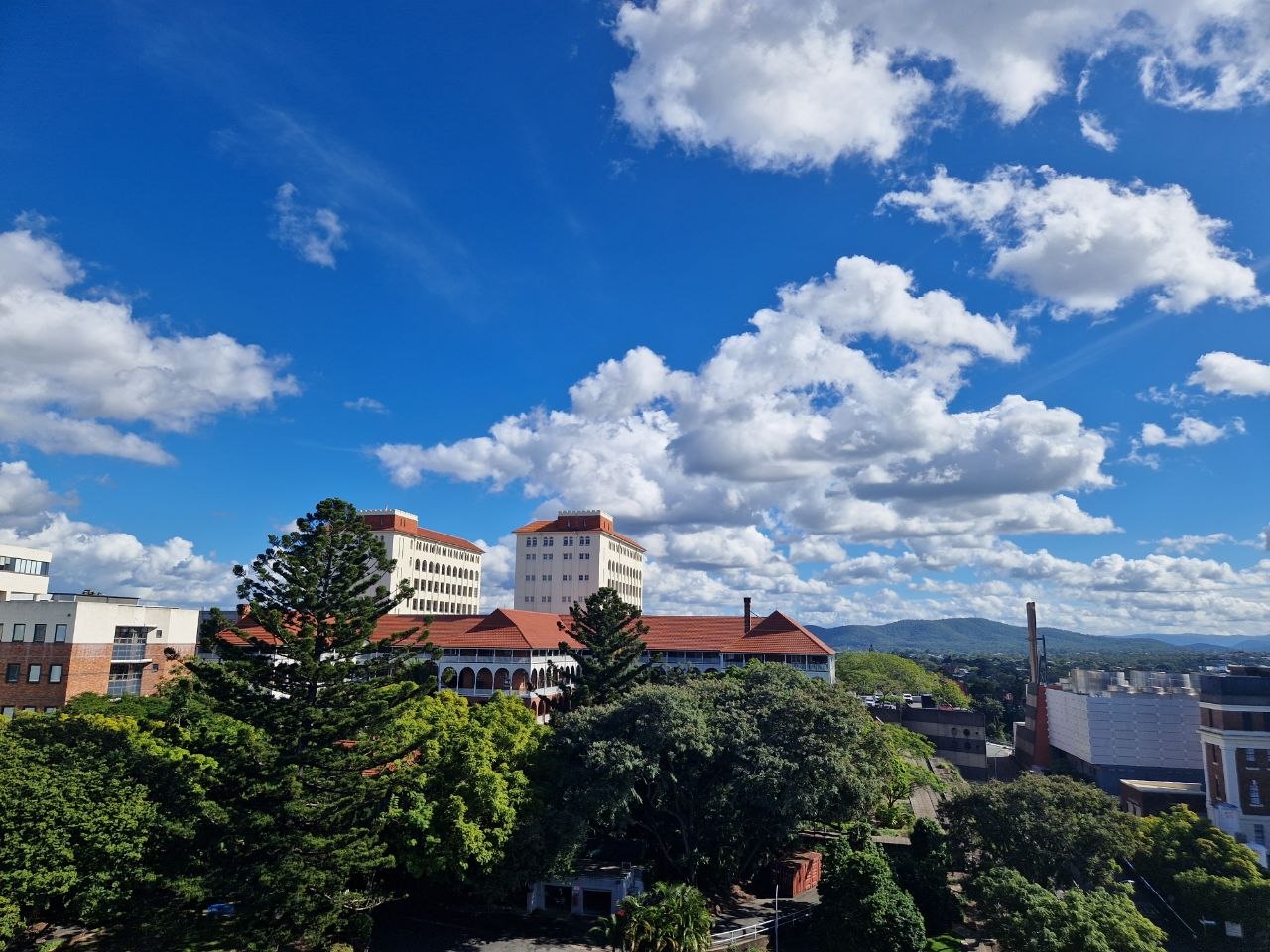
Today a bunch of us working with Nick Osborne went up to the top of the Health Sciences Building at UQ Herston (within the RBWH) to learn from Max Tyler (one of the group’s PhD students) about how to access and change over the pollen collector drum. It was enlightening to see how it’s collected and very, very Queensland that a big safety message was “Wear a hat if you’re going to be up here more than 20 minutes, and bring water if you’re alone”. No one wants to discover a dessicated scientist.
It was the first time I’d been up so high in the Herston area and while I appreciate being able to look out one way and see the Taylor Range, I didn’t much enjoy looking out towards Bowen Hills and seeing the destruction that is the TransApex tunnel project, particularly the interchange between the Clem7 (Clem Jones Tunnel), Inner City Bypass, Bowen Bridge Road and Abbottsford Road.
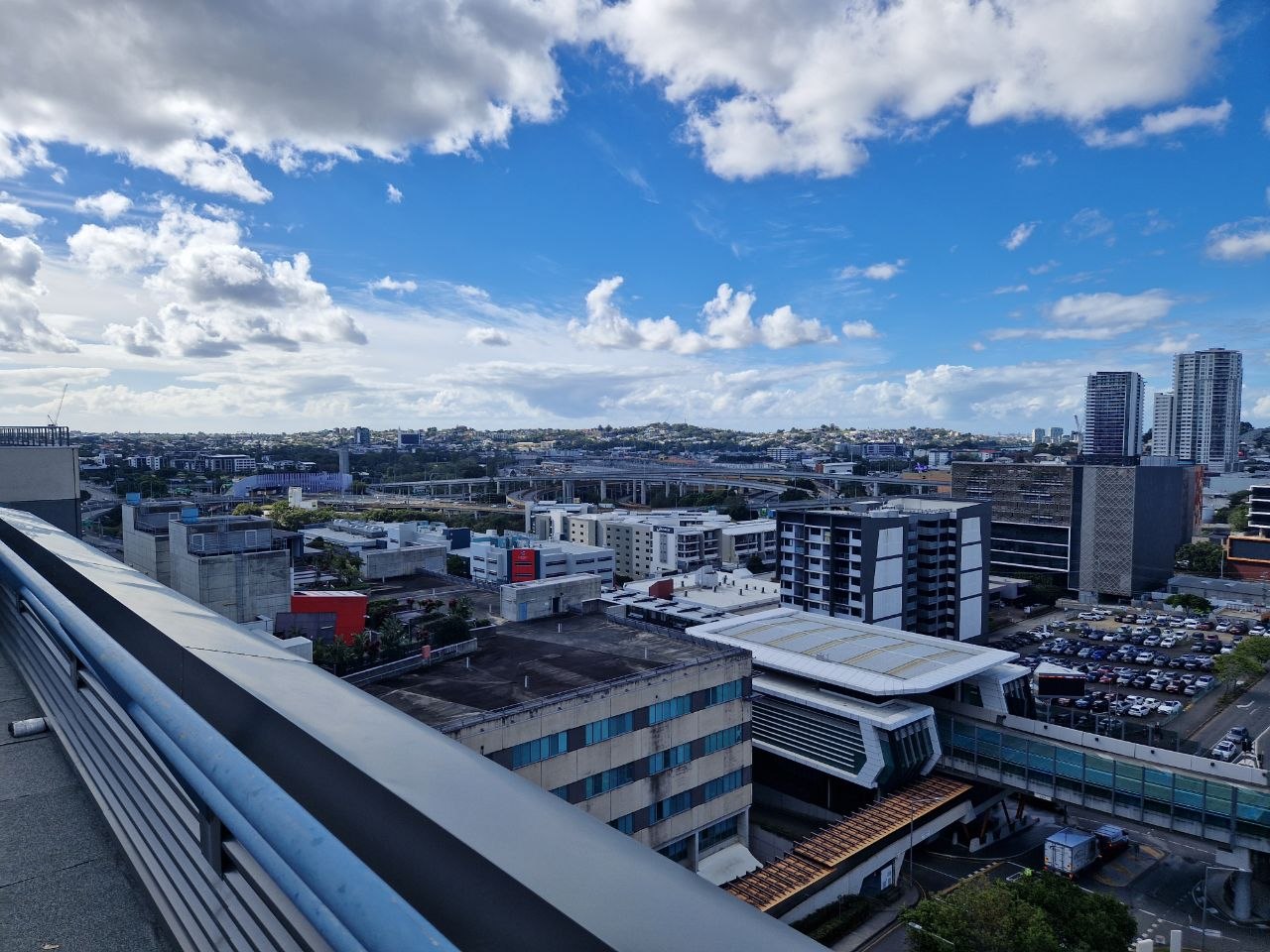
A fun fact about me is that TransApex was one of the galvanising reasons for my joining the Queensland Greens and getting involved with local and state election campaigns. I thoroughly detest the TransApex tunnels and bridges and wish that the city had have instead put the effort into building out a proper metro system rather than entrenching financially perilous road tunnels and saying that "buses can use them too" counts as public transport planning. As much as I enjoy using the 330/331/341 to get between Herston and Chermside, I'd much rather that the 333, Inner Northern Busway and Northern Busway had been built as a light railway that had the potential to fill in the gaps in the urban/suburban Queensland Rail network.
Max and I chatted afterwards about data, spatial stats techniques, the challenges of running complex models, etc. over a bowl of Katsudon and then headed back to work. It was good to see a bit more about how the group collects its data, even if this is just a small part of it, and to learn a little about why pollen data is so difficult to work with at times.